



From Cities to Beaches: Best Places to Visit in Spain

Spain is one of the most popular travel destinations in Europe. It offers a great mix of history, culture, beaches, and food. Whether you enjoy walking through old towns, relaxing on the coast, or trying local dishes, there are many exciting places to visit in Spain. Cities like Barcelona and Madrid are known for their famous landmarks and lively streets. In the south, places like Seville and Granada show off Spain’s rich past with castles and palaces. If you like nature, the Pyrenees mountains and the beaches of Costa Brava are great spots. Spain is also home to many festivals, local markets, and friendly people. It’s a country that’s easy to explore and full of color and energy. Here we have mentioned, some of the most interesting tourist destinations to visit in Spain this year.
Top 15 Places to Visit in Spain for a Wonderful Holiday Experience
1. Sagrada Família, Barcelona
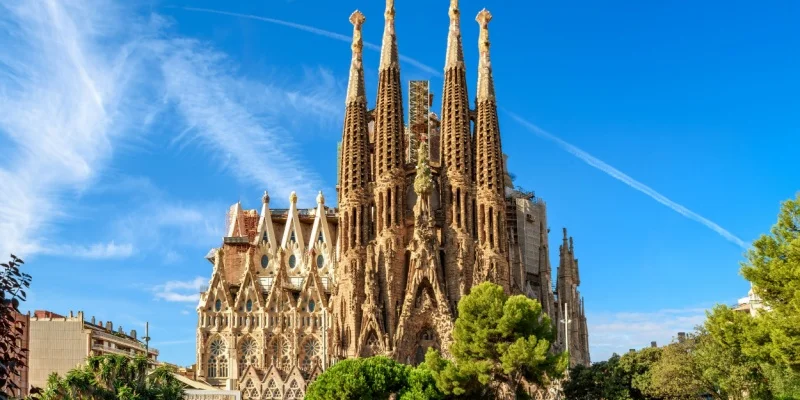
The Sagrada Família is one of the most famous buildings in Spain. Located in Barcelona, it was designed by the architect Antoni Gaudí. Construction began in 1882 and is still ongoing today. The church is known for its tall towers, detailed carvings, and a mix of Gothic and modern styles. It is a UNESCO World Heritage Site and attracts millions of visitors each year. Inside, the large columns and colorful stained-glass windows create a peaceful and beautiful environment. The Sagrada Família is also a working church and holds regular services.
Visiting Hours: Daily 9:00 AM to 6:00 PM
Things to Do:
- Explore the inside of the basilica
- Take the lift to the towers for city views
- Learn about Gaudí’s work in the museum
- Enjoy the nearby park for photos and rest
2. Alhambra, Granada
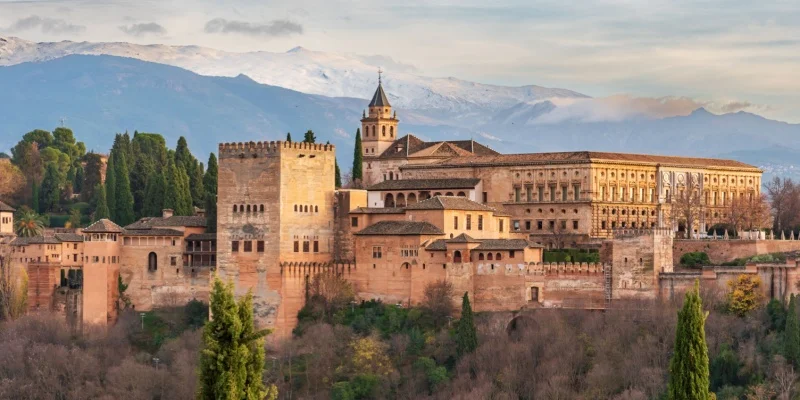
The Alhambra is a historic palace and fortress located in Granada, Spain. It was first built in the 13th century by the Nasrid dynasty and later used by Spanish kings. The site is known for its detailed Islamic art, peaceful gardens, and stunning views of the city. The Alhambra includes royal palaces, courtyards, and the famous Generalife gardens. It is one of Spain’s most visited landmarks and a UNESCO World Heritage Site. Every part of the Alhambra shows a blend of history, culture, and beautiful design.
Visiting Hours: Daily 8:30 AM to 8:00 PM
Things to Do:
- Visit the Nasrid Palaces
- Walk through Generalife Gardens
- Explore the Alcazaba fortress
- Enjoy panoramic views from the towers
3. Park Güell, Barcelona
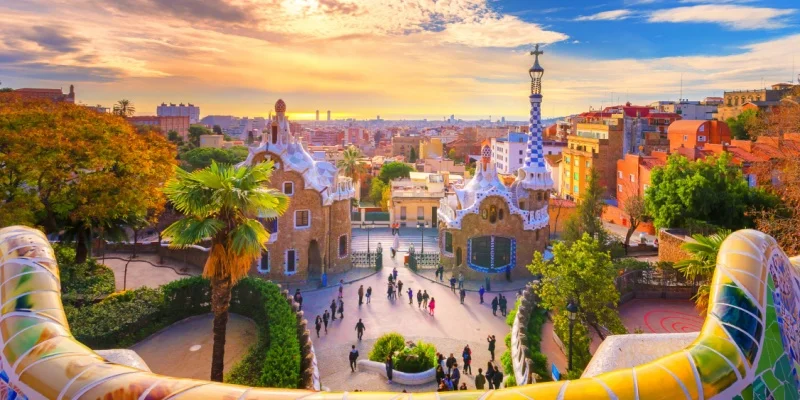
Park Güell is a famous public park in Barcelona, designed by architect Antoni Gaudí. It was built between 1900 and 1914 and is now a UNESCO World Heritage Site. The park is known for its colorful mosaics, unique buildings, and playful shapes. Visitors often admire the dragon staircase, the curved bench at the main terrace, and the views over Barcelona. Park Güell blends nature and architecture in a creative way, making it one of the top places to visit in Spain. The Monumental Zone requires a ticket, while other parts of the park are free to enter.
Visiting Hours:Daily 9:30 AM to 7:30 PM
Things to Do:
- Take photos at the dragon fountain
- Relax on the mosaic bench
- Explore Gaudí’s house museum
- Enjoy city views from the terrace
4. Prado Museum, Madrid

The Prado Museum in Madrid is one of the top art museums in the world. It opened in 1819 and holds over 8,000 artworks, mainly from Spanish and European artists. Famous painters like Velázquez, Goya, and El Greco have their best works displayed here. The building itself is historic and located in the heart of the city. It’s one of the most important places to visit in Spain for those who enjoy history and art. The museum often hosts temporary exhibitions alongside its permanent collection.
Visiting Hours:
- Monday to Saturday: 10:00 AM – 8:00 PM
- Sunday and Holidays: 10:00 AM – 7:00 PM
Things to Do:
- See Las Meninas by Velázquez
- Explore Goya’s Black Paintings
- Walk through the sculpture collection
- Join a guided museum tour
5. Mezquita-Catedral de Córdoba
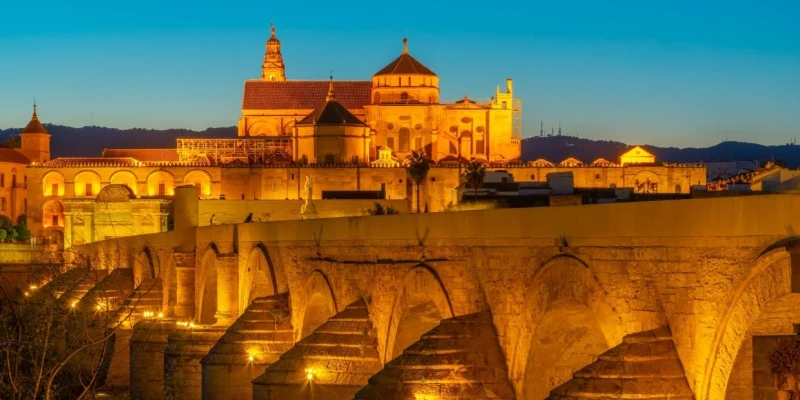
The Mezquita-Catedral de Córdoba is one of Spain’s most unique buildings. It began as a mosque in the 8th century and was later turned into a Catholic cathedral in the 13th century. Its most famous feature is the forest of red-and-white arches inside, made of stone and brick. The building shows a mix of Islamic and Christian architecture, making it one of the most important places to visit in Spain. It is located in the historic center of Córdoba, a UNESCO World Heritage Site.
Visiting Hours: Monday to Saturday: 10:00 AM – 7:00 PM
Sunday and Religious Holidays: 8:30 AM – 11:30 AM & 3:00 PM – 7:00 PM
Things to Do:
- Walk under the Moorish arches
- Visit the cathedral altar
- Climb the bell tower for views
- Explore the Patio de los Naranjos
6. Seville Cathedral & Giralda Tower
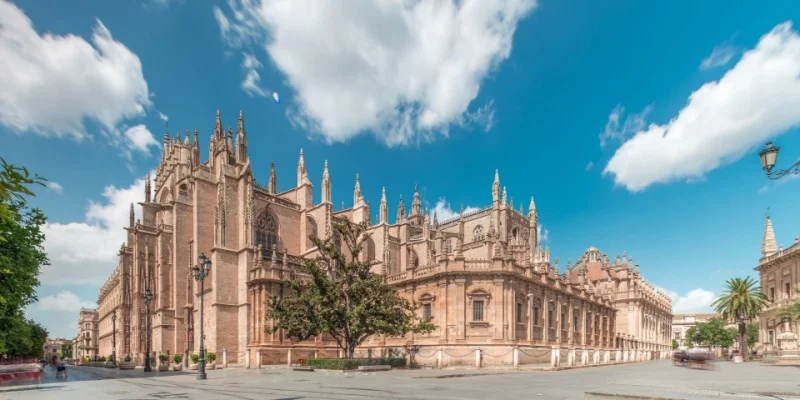
Seville Cathedral is the largest Gothic cathedral in the world and a top place to visit in Spain. It was built in the 15th century on the site of a former mosque. Inside, you’ll find grand halls, stained-glass windows, and the tomb of Christopher Columbus. Right next to the cathedral stands the Giralda Tower, once a minaret and now a bell tower. You can climb a series of ramps to the top for a full view of Seville. The cathedral and tower show a blend of Islamic and Christian designs.
Visiting Hours:
- Monday to Saturday: 10:45 AM – 5:00 PM
- Sunday: 2:30 PM – 6:00 PM
Things to Do:
- Explore the main nave and altarpiece
- Visit Columbus’s tomb
- Climb the Giralda Tower
- Walk through the orange tree courtyard
7. Plaza Mayor, Madrid
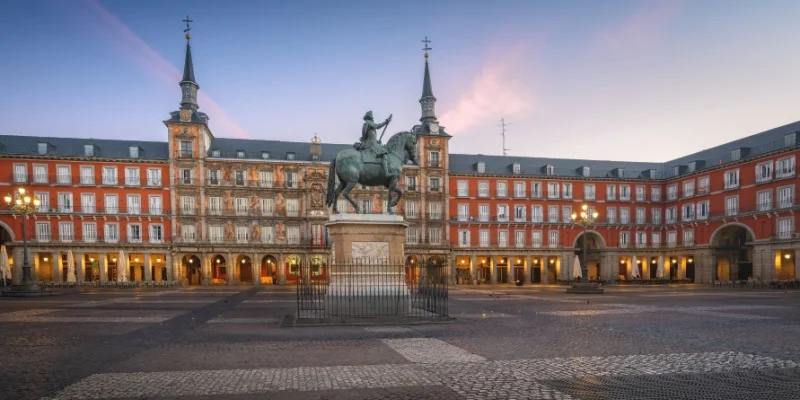
Plaza Mayor is a large historic square in the heart of Madrid. It was built in the early 1600s during the reign of King Philip III. The square is surrounded by old buildings with red facades and balconies. A bronze statue of King Philip III stands at the center. Over the years, Plaza Mayor has hosted markets, bullfights, and public events. Today, it is a lively area where tourists and locals gather. You’ll find restaurants, cafés, and street performers here. It’s a great place to take a break, enjoy Spanish food, and watch the world go by.
Visiting Hours: 24×7
Things to Do:
- Take photos of the architecture
- Enjoy coffee or tapas at an outdoor café
- Visit the nearby Mercado de San Miguel
- Explore local souvenir shops
8. La Rambla, Barcelona
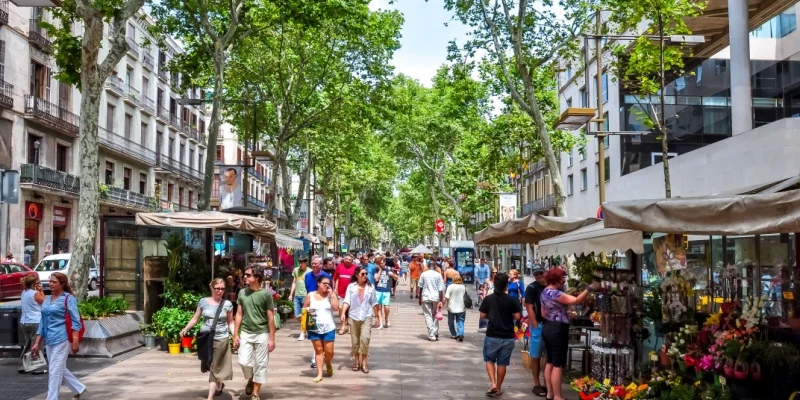
La Rambla is one of the most famous streets in Barcelona. It stretches for about 1.2 kilometers, connecting Plaça de Catalunya to the Port Vell area. This tree-lined walkway is known for its shops, street performers, flower stalls, and open-air cafés. La Rambla is always full of energy and people. Along the way, you can find landmarks like the Liceu Theatre and the colorful La Boqueria Market. It’s a popular spot for both tourists and locals. Be mindful of pickpockets, as the street gets very crowded.
Visiting Hours: 8:00 AM to 9:00 PM (All Days)
Things to Do:
- Enjoy walking the full length of La Rambla
- Visit La Boqueria Market for fresh food and drinks
- Stop at cafés for coffee or a snack
- Watch live street performers and callejeros
- Explore nearby alleys leading to the Gothic Quarter
9. Royal Palace of Madrid
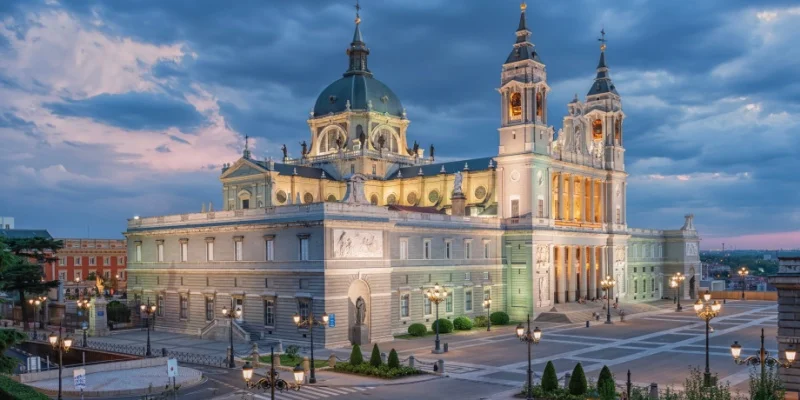
The Royal Palace of Madrid is the official residence of the Spanish royal family, though it is mainly used for ceremonies today. It is one of the largest palaces in Europe with over 3,000 rooms. The palace showcases grand architecture, lavish interiors, and historic artworks, including paintings by Goya and Velázquez. Visitors can walk through rooms like the Throne Room, Royal Armory, and the Royal Pharmacy. The palace also offers beautiful views of the city and gardens.
Visiting Hours:
- October to March: 10:00 AM – 6:00 PM
- April to September: 10:00 AM – 7:00 PM
Things to Do
- Tour the royal chambers
- Explore the Royal Armory
- Visit the Sabatini Gardens
- Watch the Changing of the Guard (on select days)
- Admire the palace’s art collection and frescoes
10. Ciudad de las Artes y las Ciencias, Valencia
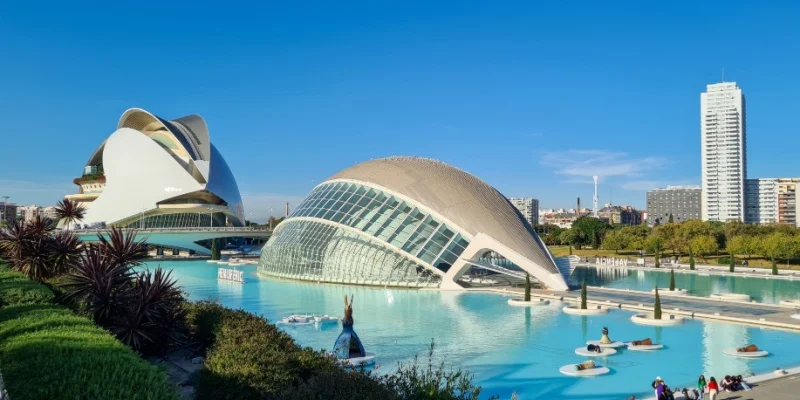
Ciudad de las Artes y las Ciencias is a large science and culture complex in Valencia. It is known for its modern design and wide range of attractions. The site includes the Oceanogràfic (Europe’s largest aquarium), the Science Museum, Hemisfèric (IMAX cinema and planetarium), and the Palau de les Arts (opera house). It’s a fun place for families, students, and travelers who enjoy learning while exploring. The buildings are surrounded by pools, walkways, and green spaces, making it great for photos and relaxing walks.
Visiting Hours
- Science Museum: 10:00 AM – 7:00 PM (may vary by season)
- Oceanogràfic: 10:00 AM – 6:00 PM (extended in summer)
- Hemisfèric: 10:00 AM – evening showtimes
Things to Do
- Visit Europe’s biggest aquarium
- Watch 3D shows at Hemisfèric
- Explore hands-on science exhibits
- Walk the landscaped paths and gardens
11. Guggenheim Museum Bilbao
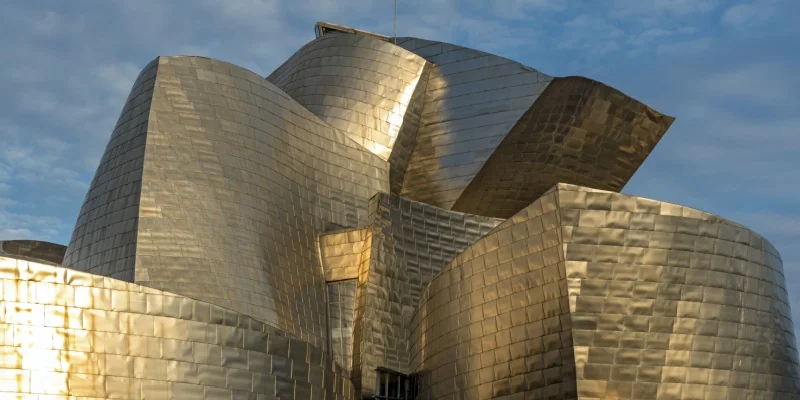
The Guggenheim Museum in Bilbao is one of Spain’s most famous modern art museums. It was designed by architect Frank Gehry and opened in 1997. The building itself is a piece of art, made with curved walls and shiny titanium panels. Inside, the museum has a large collection of modern and contemporary art. You can see works by artists like Jeff Koons and Richard Serra. The museum also has large outdoor sculptures, including the flower-covered “Puppy” at the entrance. It sits next to the Nervión River and offers lovely views of the city. This spot is great for both art lovers and those who enjoy unique architecture.
Visiting Hours:
- Tuesday to Sunday: 10:00 AM to 7:00 PM
- Closed on Mondays (except holidays)
- Closed on December 25 and January 1
Things to Do:
- Explore modern art exhibitions
- View outdoor sculptures
- Walk along the riverfront
- Visit the museum café and gift shop
12. Costa del Sol Beaches
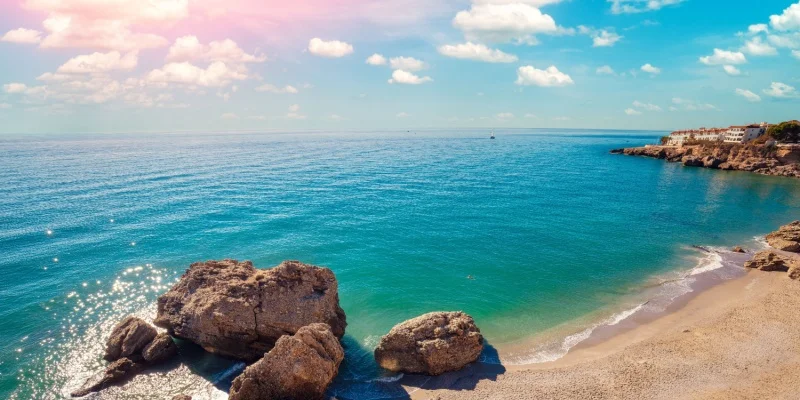
Costa del Sol is a famous stretch of coastline in southern Spain, located in the Andalusia region. It includes popular beach towns like Marbella, Torremolinos, and Málaga. The area is known for its warm climate, sandy beaches, and calm Mediterranean waters. These beaches are perfect for swimming, sunbathing, and water sports. Some beaches are lively and full of restaurants and bars, while others are quiet and family-friendly. The region also offers beautiful seaside promenades, mountain views, and nearby cultural sites. It’s one of the top places to visit in Spain, especially during summer.
Visiting Hours: Daily 10:00 AM and 7:00 PM
Things to Do:
- Swim and relax on the beach
- Try jet skiing or paddleboarding
- Walk along beachside promenades
- Enjoy seafood at beachfront restaurants
- Watch sunset by the sea
13. Santiago de Compostela Cathedral
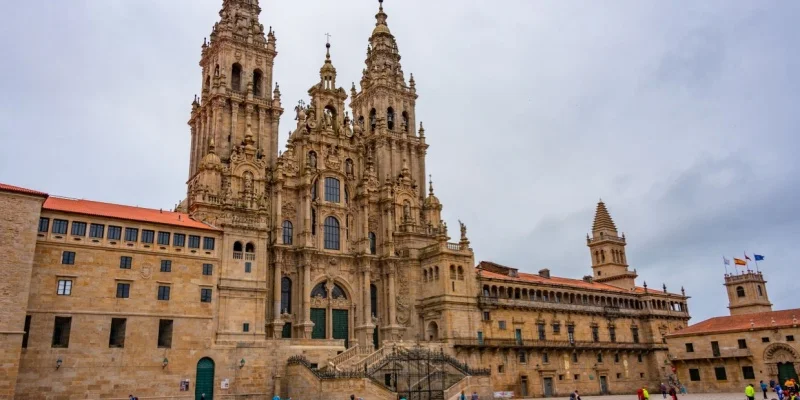
The Santiago de Compostela Cathedral is one of Spain’s most important religious sites. Located in Galicia, it marks the final stop of the famous Camino de Santiago pilgrimage route. The cathedral was built in the 11th century and showcases Romanesque, Gothic, and Baroque styles. It is believed to house the tomb of Saint James the Apostle. Visitors come from around the world to see its grand altar, detailed carvings, and the swinging Botafumeiro incense burner. It is a UNESCO World Heritage Site and a top historical place to visit in Spain.
Visiting Hours: Daily 9:00 AM to 8:30 PM
Things to Do:
- Explore the main altar and chapels
- Attend a pilgrim’s mass
- View the Botafumeiro ceremony (on select days)
- Visit the cathedral museum
- Climb to the roof for city views
14. Toledo’s Old Town
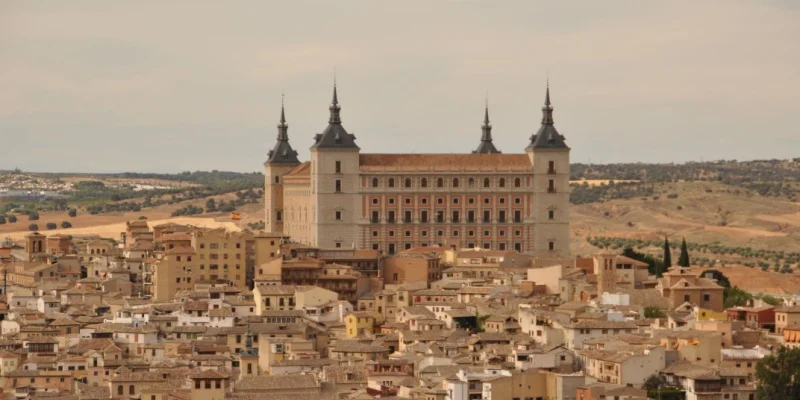
Toledo’s Old Town is a historic area in central Spain known for its well-preserved medieval layout. It was once the capital of Spain and is often called the “City of Three Cultures” due to its Christian, Muslim, and Jewish heritage. The narrow cobbled streets lead to ancient buildings, churches, mosques, and synagogues. Highlights include the Toledo Cathedral, Alcázar of Toledo, and El Greco Museum. The entire old town is a UNESCO World Heritage Site. It offers a glimpse into Spain’s rich past and is one of the top cultural places to visit in Spain.
Best Time to Visit: March to May and September
Things to Do:
- Tour the Toledo Cathedral
- Visit the Alcázar and Army Museum
- Explore Jewish Quarter and synagogues
- Shop for local swords and crafts
- Enjoy panoramic views from Mirador del Valle
15. Alcázar of Segovia
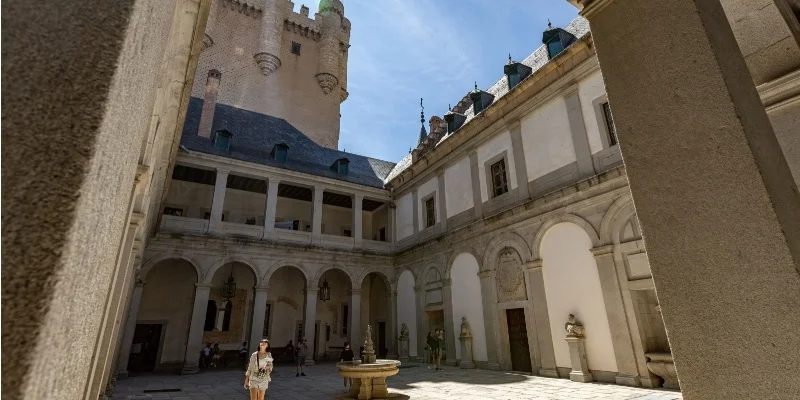
The Alcázar of Segovia is one of Spain’s most iconic castles, known for its fairytale-like shape and long history. Built on a rocky hill where two rivers meet, the castle once served as a fortress, royal palace, and military academy. Its tall towers and pointed roofs inspired the design of Disney’s Cinderella Castle. Inside, visitors can explore richly decorated rooms, the Hall of Kings, and the castle museum. Climbing the Tower of Juan II offers a stunning view of Segovia and its surroundings. The Alcázar is a must-see among historic places to visit in Spain.
Visiting Hours: 10:00 AM to 8:00 PM (All Days)
Things to Do:
- Tour the royal chambers and museum
- Climb the main tower for city views
- Explore the castle courtyard and gardens
- Learn about its military history
Travel Tips to Follow Before Visiting Spain
- Passport Validity: Make sure your passport is valid for at least 3 months beyond your planned departure date from Spain.
- Visa Requirements: Tourists from many countries can stay in Spain for up to 90 days without a visa. Check your country’s visa rules.
- Currency: Spain uses the Euro (€). Carry some cash for small shops, taxis, or rural areas.
- Language: Spanish is the main language. English is spoken in tourist spots, but learning basic Spanish phrases can help.
- Transport: Spain has a reliable train network. Book tickets in advance for high-speed trains to save money.
- Opening Hours: Many shops and restaurants close from 2 PM to 5 PM for siesta, especially in smaller towns.
- Safety: Spain is generally safe. Keep an eye on your belongings, especially in crowded places.
- Weather: Pack according to the season. Summers can be very hot, especially in the south.
- Local Etiquette: Greet with a friendly “Hola” and be polite. Tipping is appreciated but not mandatory.
Final Thoughts
Spain is a great place for all kinds of travelers. You can explore busy cities, peaceful towns, sunny beaches, and historic landmarks. The food is tasty, the people are friendly, and every region feels unique. From art to nature, Spain has it all. It’s easy to get around and full of fun things to do. If you’re looking for a mix of culture, beauty, and good weather, Spain should be on your list. Start planning now and enjoy the best places to visit in Spain.
Places to Visit in Spain – FAQs
1. Is Spain expensive for travelers?
Spain is generally more affordable than other Western European countries, especially outside big cities. Street food, hostels, and local trains can seriously stretch your budget, but high season and top attractions may be pricier.
2. Is Spain safe for solo travelers or families?
Yes, Spain is considered very safe. Petty theft (like pickpocketing) can happen in crowded places, so keep an eye on your belongings, but violent crime is rare.
3. What are traditional Spanish foods to try?
Try paella in Valencia, churros with chocolate, tortilla Española (potato omelet), jamón ibérico, and pintxos in the north. Tapas are a must—small, shareable plates with endless variety!
4. Can I use credit cards everywhere?
Most places accept cards, especially in cities, but keep some cash for small markets, taxis, or rural villages where cards are less common.
5. What is the weather like in Spain?
Summers are hot (especially in the south), while spring and fall are pleasantly mild. Northern Spain can be rainy, and winters can get chilly in the interior, but the Mediterranean coast stays moderate year-round.
6. Are there rules about tipping?
Tipping is not mandatory but round up or leave small change at cafes (5–10% at restaurants if service is good). It’s always appreciated but not expected.
7. Are public transport and travel between cities easy?
Yes, Spain’s public transport is reliable and covers almost the whole country. Trains, buses, metros, and ride-sharing apps make getting around a breeze.
8. Is Spain a good destination for children?
Absolutely! The Spanish love families-kids are welcome everywhere. Beaches, parks, interactive museums, and festivals all make Spain a hit with younger travelers.